You wake up at 3 am and your hand feels like it's full of pins and needles. You shake it out, it settles down, and you fall back asleep. Then it happens again the next night. Or maybe it's during the day: your fingers go numb while you type, hold your phone or grip the steering wheel.
Most people assume it's carpal tunnel. Sometimes it is. But the nerves that run to your hand start all the way up in your neck, and a problem anywhere along that path can cause the same symptoms. Finding the real source makes a big difference in what actually helps.
What is Carpal Tunnel Syndrome?
Carpal tunnel syndrome is pressure on the median nerve where it passes through a narrow tunnel in your wrist. When that space gets crowded, usually from swelling of the tendons that share it, the nerve gets squeezed. It's common in people who type, use tools, do assembly work or spend a lot of time gripping something with the wrist bent.
What are the Signs of Carpal Tunnel?
- Numbness or tingling in the thumb, index finger, middle finger and half of the ring finger
- Symptoms that are worse at night or first thing in the morning
- Shaking out your hand to make the tingling go away
- A weak grip or dropping things more often
- Pain that sometimes spreads up into the forearm
One clue: carpal tunnel usually leaves the pinky finger alone. If your pinky is numb too, the problem may be somewhere else.
Can Hand Numbness Come From Your Neck?
Yes. The nerves that control your hand leave the spine in your lower neck. A stiff joint, a disc problem or tight muscles there can irritate those nerve roots and send numbness, tingling or pain down the arm into the hand. This is often called a pinched nerve in the neck. It can feel a lot like carpal tunnel, but it often comes with neck stiffness, shoulder pain or symptoms that change when you move your head.
If neck pain is part of your picture, our neck pain chiropractor guide explains how that's treated.
How Can You Tell Carpal Tunnel From a Pinched Nerve?
There are a few patterns that point one way or the other, although an exam is the only reliable way to know:
- Carpal tunnel usually affects the thumb side of the hand, flares at night, and doesn't change much when you move your neck.
- A pinched nerve in the neck often comes with neck or shoulder pain, can affect different fingers, and may get better or worse with certain head positions.
- Tight forearm or elbow muscles can also press on nerves and often come with forearm aches after gripping or lifting.
Some people have more than one spot of pressure at the same time. That's one reason treating only the wrist doesn't always work.
How Does a Chiropractor Treat Carpal Tunnel and Hand Numbness?
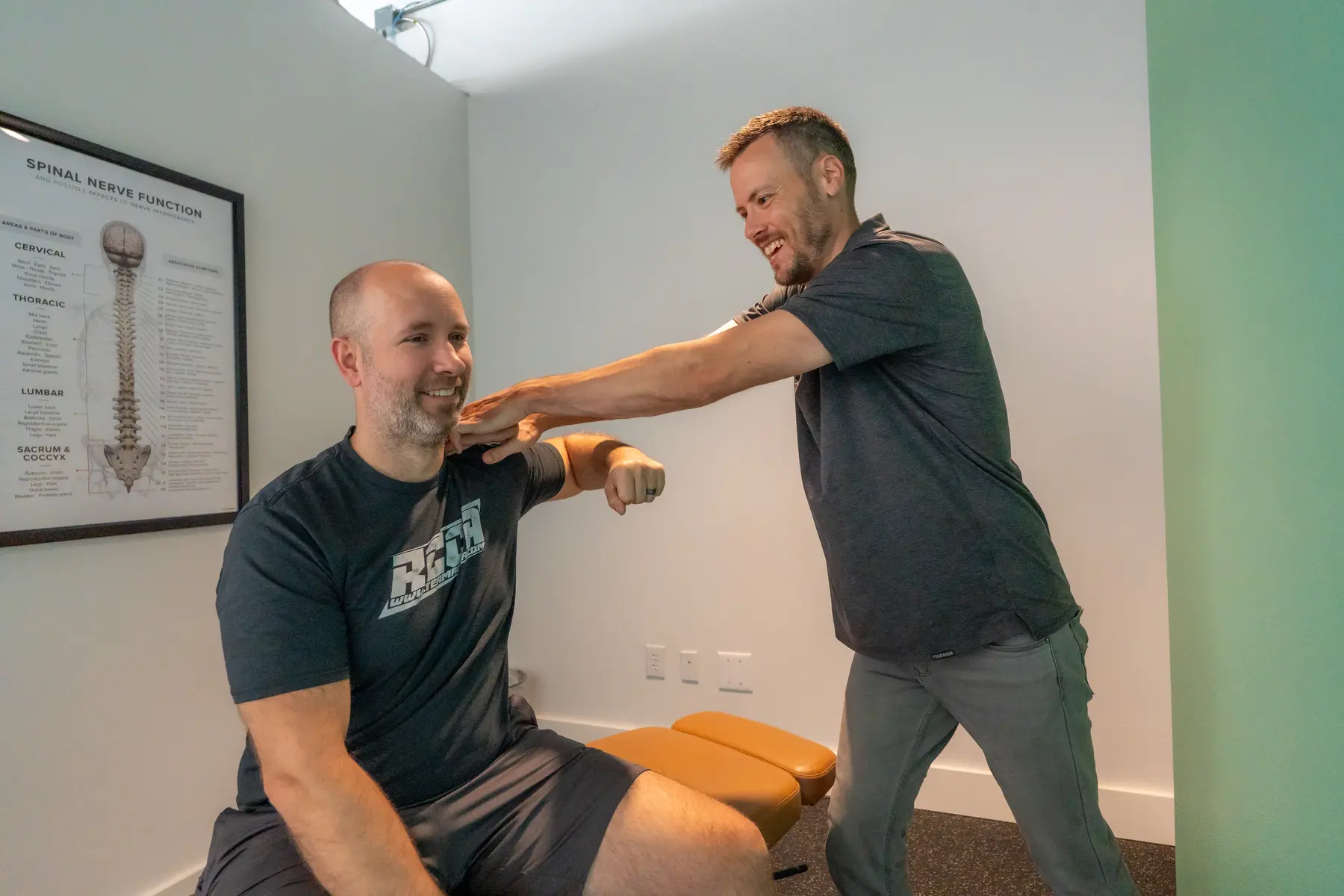
A chiropractor treats hand numbness by finding where the nerve is being squeezed and easing pressure at every point along the way. Dr. Michael Moss, D.C. checks your neck, shoulder, elbow, forearm and wrist, tests your grip and sensation, and orders digital X rays if they're needed.
Your hand and wrist pain treatment plan may include gentle manual adjusting for the wrist, elbow and neck, plus myofascial release and trigger point therapy for tight forearm and shoulder muscles. Some patients also benefit from therapeutic ultrasound or cold laser therapy. You'll learn simple nerve glide and stretching exercises to keep things moving at home.
What can you Change at Your Desk to Ease Hand Numbness?
Small changes to how you work can take a lot of pressure off your wrists and neck:
- Keep your wrists straight, not bent up or down, while typing
- Set your keyboard and mouse at elbow height
- Raise your screen so you aren't looking down for hours
- Take a short break every 30 to 45 minutes to stretch your hands and shake out your arms
- Loosen your grip on your phone, mouse and steering wheel
- Try not to sleep with your wrists curled under your chin or pillow
A wrist splint at night keeps the wrist straight and helps many people with carpal tunnel sleep better.
When Should You See a Medical Doctor for Hand Numbness?
See a medical provider if numbness is constant, your hand muscles look smaller or weaker, you're dropping things often, or symptoms keep getting worse despite care. Nerve testing may be needed, and some severe cases need injections or surgery. Get emergency care right away for sudden numbness or weakness on one side of the body, facial drooping or trouble speaking.
Is it Carpal Tunnel or Tennis Elbow?
They're different problems. Carpal tunnel causes numbness and tingling in the fingers. Tennis elbow causes pain on the outside of the elbow and forearm, usually without numbness. If your pain is mostly at the elbow from gripping or swinging, read our article on chiropractic care for athletes, which covers tennis and golfer's elbow.
FAQ Common questions
Hand Numbness FAQs
A chiropractor can help many people with carpal tunnel symptoms by easing pressure on the nerve at the wrist, elbow and neck and improving how those joints and muscles move. Severe cases may also need medical care.
Sleeping with your wrists bent puts extra pressure on the median nerve, which is why carpal tunnel often flares at night. Sleeping position can also irritate nerves in the neck.
Most people try conservative care first, such as splinting, activity changes, chiropractic care and exercises. Surgery is usually considered when symptoms are severe or don't improve.
Many people notice less tingling within a few weeks, especially once they change the habits that irritate the nerve. Dr. Moss will give you a realistic timeline at your first visit.
Get your Hand Numbness Checked in Arlington, TX
If tingling fingers are waking you up or slowing you down at work, don't wait for it to get worse. A careful exam can show whether the problem is in your wrist, your neck or somewhere in between. New patients start with our $99 new patient special.
Call (817) 718 1051 or book a visit online. We're at 5801 W Interstate 20, Suite 350, Arlington, TX 76017, Monday through Thursday, 7:30 am to 12:00 pm and 3:00 pm to 6:00 pm.