Arlington is a sports town. On any given weekend you'll find kids at soccer practice, teens under the Friday night lights, adults on the pickleball courts and runners out on the trails at River Legacy Park. And wherever people are moving, a few of them are getting hurt.
Whether you're a competitive athlete or just someone who hates sitting on the couch, an injury doesn't have to mean a long break. With the right care, most people heal faster and come back stronger.
What Does a Chiropractor for Athletes Do?
A chiropractor for athletes figures out why something hurts or isn't moving right, then treats it with hands on, nonsurgical care. That usually means getting stiff joints moving, helping injured muscles and tendons heal, fixing imbalances and rebuilding strength so you can return to your sport without setting yourself back. If you're dealing with a specific injury right now, our sports injury chiropractor in Arlington page explains how we treat it.
What Injuries Do Athletes Get Most?
Every sport has its usual suspects, but these are the ones we see most often:
- Shoulder pain from throwing, swimming, volleyball, tennis or lifting
- Tennis elbow, golfer's elbow and wrist pain from gripping and swinging
- Runner's knee, shin splints and plantar fasciitis in runners and court sports
- Hip and hamstring strains from sprinting and quick cuts
- Lower back pain from lifting, twisting and golf swings
- Ankle sprains in basketball, soccer and trail running
How Are Sports Injuries Treated at True Works Chiropractic?
It starts with a conversation about how you got hurt, what your sport asks of your body and when you want to be back. Then Dr. Michael Moss, D.C. looks at how you move, tests the injured area and orders digital X rays if they're needed.
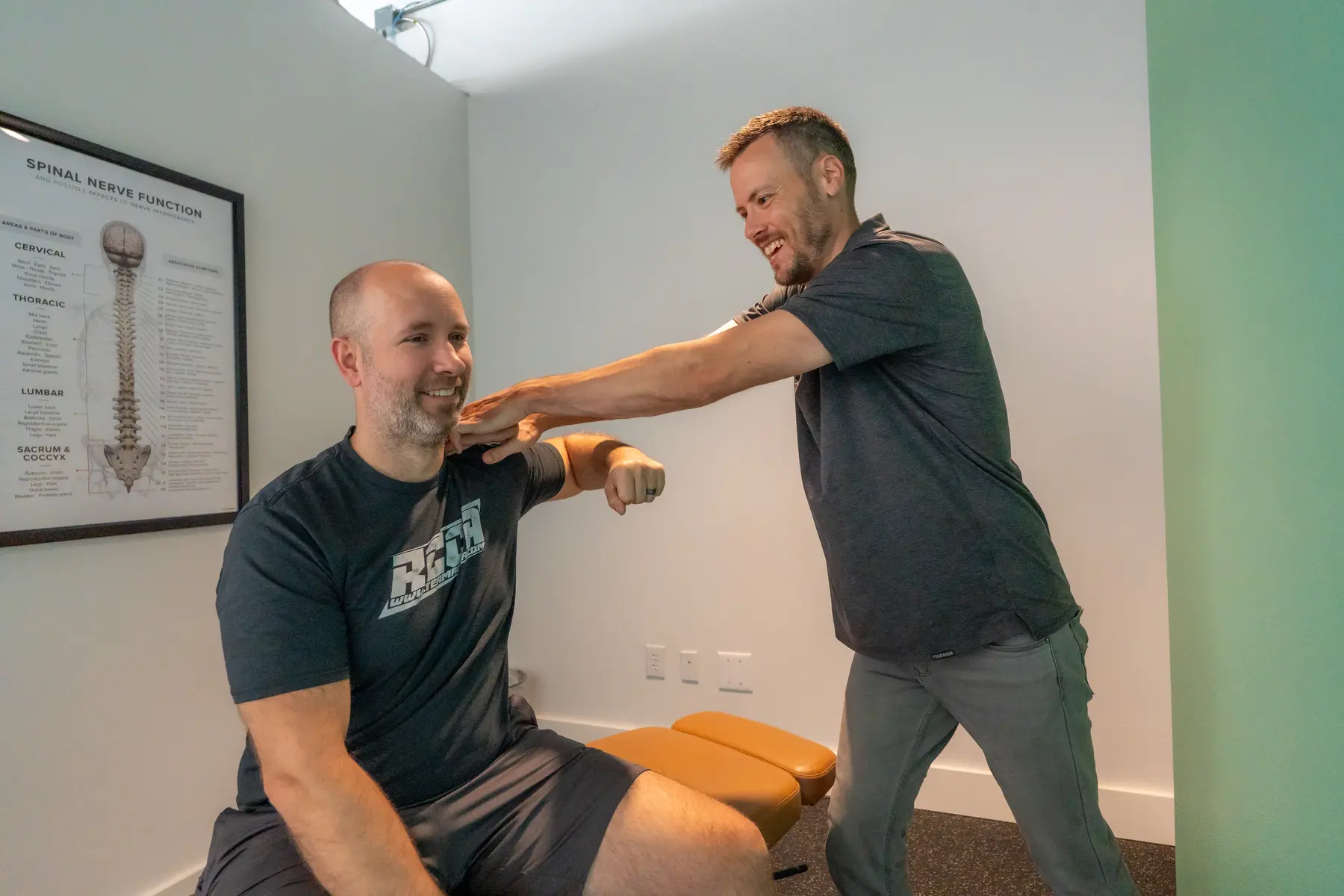
Treatment is matched to the injury. Manual adjusting gets stiff joints moving again, not just in your spine but in shoulders, elbows, knees and ankles too. Therapeutic massage and trigger point therapy work out tight, overworked muscles. For sore tendons and soft tissue, therapeutic ultrasound, cold laser therapy and muscle stimulation can help with pain and swelling. Then rehab exercises rebuild the strength and stability you need before going back to full speed.
Can a Chiropractor Help a Sports Shoulder Injury?
Yes. A lot of shoulder pain in athletes isn't just about the shoulder. It often involves a stiff upper back, a tight neck and weak muscles around the shoulder blade. Freeing up those areas, loosening tight muscles and strengthening the rotator cuff can take pressure off the shoulder and improve how you throw, swim or lift.
What Helps Plantar Fasciitis and Runner's Knee?
Foot and knee pain often come from how your hips, knees and ankles work together when you run or jump. Getting stiff joints moving, loosening tight calves and hamstrings, and adding a bit of targeted strength work can calm down plantar fasciitis and runner's knee and make them less likely to come back.
How Long Does a Sports Injury Take to Heal?
A mild strain or sprain often feels better in one to three weeks. Moderate injuries usually take four to eight weeks, and bigger injuries can take a few months. The most common mistake we see is going back too soon. Dr. Moss will help you decide when it's safe to train again so you don't end up back at square one.
Can Chiropractic Care Help You Perform Better?
Regular chiropractic care may help you move more efficiently by keeping joints mobile, catching small imbalances before they turn into injuries and improving your mechanics. It works best alongside a good warm up, proper technique, rest days and sensible training. If you want a place to start, try the routines in our stretching techniques for injury recovery guide.
Chiropractor or Physical Therapist for a Sports Injury?
Both can help, and the right choice depends on your injury. Chiropractic care focuses on joint mechanics and hands on treatment, while physical therapy leans more on exercise based rehab. We break down the differences in chiropractic vs physical therapy.
When Should You Go to Urgent Care for a Sports Injury?
Head to urgent care or the ER for a possible broken bone, a joint that looks out of place, an injury you can't put weight on, major swelling, numbness or weakness, or any head injury with confusion, vomiting or passing out.
FAQ Common questions
Athlete FAQs
Yes. We see kids and teens regularly and adjust everything to their age and size. Learn more about our pediatric chiropractic treatments.
Yes. Restoring elbow and wrist motion, loosening tight forearm muscles and adding strength work can ease both tennis elbow and golfer's elbow.
Stop playing, ice the area for 15 to 20 minutes at a time for the first couple of days, use light compression and keep it raised. If pain or swelling hangs around for more than a few days, get it checked.
No. You can book directly without a referral.
Book a Visit for Your Sports Injury in Arlington, TX
Don't let an injury keep you on the sidelines longer than it has to. Dr. Michael Moss, D.C. will help you figure out what's going on and build a plan to get you back to your sport. New patients start with our $99 new patient special.
Call (817) 718 1052 or request an appointment. We're at 5801 W Interstate 20, Suite 350, Arlington, TX 76017, Monday through Thursday, 7:30 am to 12:00 pm and 3:00 pm to 6:00 pm.