Somewhere along the way, standing up from the couch turned into a project. Rolling over in bed takes planning. And by the end of the day, your lower back just aches. If that sounds familiar, you're far from alone. Most pregnant women deal with back pain at some point, and many say it's one of the hardest parts of the whole nine months.
The good news is that a lot can be done to make it more manageable. Here's why it happens and what actually helps.
Why Does Your Back Hurt During Pregnancy?
Back pain during pregnancy comes from a few changes happening at once. As your baby grows, your center of gravity moves forward, so your lower back arches more to keep you balanced. Your body also makes a hormone called relaxin that loosens the ligaments in your pelvis to prepare for birth, which can leave joints less stable and more easily strained. Add a bit of extra weight, changes in posture and less restful sleep, and your back ends up doing a lot more work than usual.
What Kind of Back Pain is Common in Each Trimester?
Every pregnancy is different, but these patterns are common:
- First trimester: Some women notice early lower back aches as hormone levels rise and ligaments begin to loosen, even before the bump shows.
- Second trimester: As the belly grows, lower back pain, hip pain and pain on one side of the pelvis become more common. Round ligament pain, a sharp pull low in the belly or groin, often shows up now too.
- Third trimester: The extra weight and forward pull peak. Many women feel pain in the lower back, the back of the pelvis, the tailbone or the front of the pelvic bone, especially when walking, climbing stairs or turning in bed.
What is Pelvic Girdle Pain?
Pelvic girdle pain is pain in the joints of the pelvis, usually at the back near the dimples above your buttocks or at the front where the pelvic bones meet. It's often worse when you walk, stand on one leg, get dressed or turn over in bed. It happens because loosened ligaments let these joints move more than usual. It's very common, and it's one of the main reasons women look for prenatal chiropractic care in Arlington.
Can You Get Sciatica While Pregnant?
Yes. Pain that travels from your lower back or buttock down the back of one leg is sometimes true sciatica, but during pregnancy it's more often caused by tight hip muscles or strain in the pelvic joints. Either way, it can make sitting and walking uncomfortable. If leg pain is your main problem, our sciatica treatment guide explains the usual causes.
How Can You Ease Pregnancy Back Pain at Home?
A few simple habits can make a real difference:
- Stand tall and try not to lock your knees or lean back on your heels
- Sleep on your side with a pillow between your knees, and another under your belly if it helps
- Keep your knees together when rolling over or getting out of the car
- Wear supportive, low heeled shoes
- Try a pregnancy support belt for walking or long days on your feet
- Stay active with walking, swimming or prenatal yoga if your doctor says it's okay
- Use a warm, not hot, compress on sore muscles
- Sit with your back supported and both feet flat on the floor
Our stretching and strengthening exercises page shares the kind of gentle movements we often recommend.
How Can a Chiropractor Help With Pregnancy Back Pain?
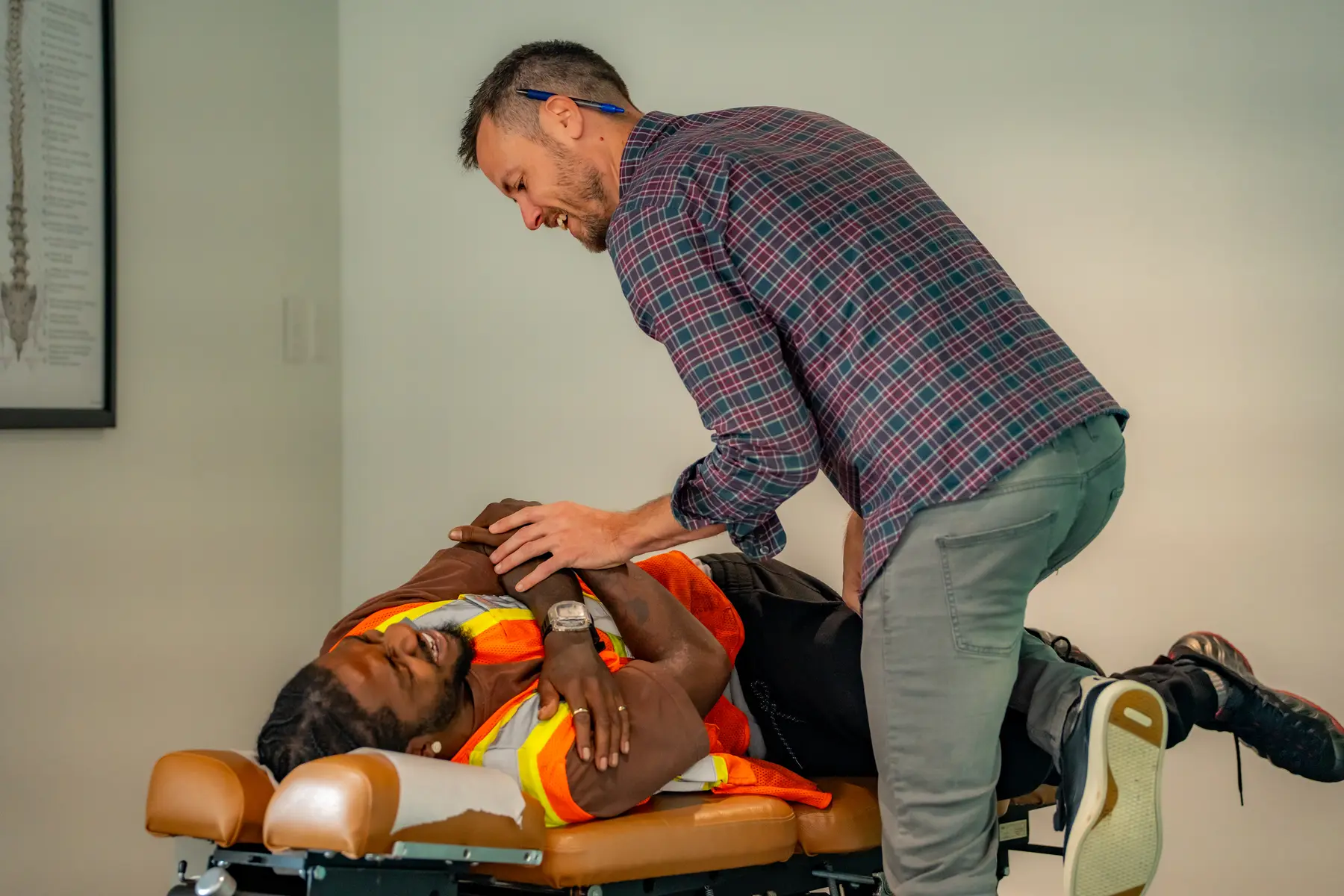
A chiropractor can help pregnancy back pain by easing strain on the lower back and pelvic joints and relaxing the muscles that tighten as your body changes. At True Works Chiropractic, Dr. Michael Moss, D.C. adapts every visit to how far along you are and how you're feeling that day. Care usually involves gentle manual adjusting, soft tissue work such as myofascial release, and simple exercises and posture tips for home. If you have a high risk pregnancy, check with your OB or midwife before starting any new care.
When is Back Pain During Pregnancy a Warning Sign?
Call your doctor or go to labor and delivery right away if back pain comes with any of these:
- Vaginal bleeding or fluid leaking
- Back pain or belly tightening that comes and goes in a regular pattern
- Fever, chills or burning when you pee
- Severe or sudden pain that doesn't ease with rest
- Numbness in the groin, weakness in the legs, or trouble controlling your bladder or bowels
- Severe headache, vision changes or sudden swelling in your face or hands
These can be signs of preterm labor, an infection or another problem that needs medical care.
Does Back Pain Go Away After Pregnancy?
For most women, pregnancy back pain eases within a few weeks to a few months after birth as hormones settle and ligaments tighten again. Lifting a car seat, nursing in a slumped position and carrying a baby on one hip can keep it going, though. If pain lingers well after delivery, it's worth having it checked. Our beginner's guide to back pain is a good next read.
FAQ Common questions
Pregnancy Back Pain FAQs
Some women feel mild lower back aches early on as hormones change, but back pain alone isn't a reliable sign of pregnancy.
On your side, ideally your left, with a pillow between your knees. A full length pregnancy pillow can support your belly and back at the same time.
A warm compress on your back or hips is usually fine. Avoid high heat, and avoid hot tubs and saunas, which can raise your core temperature.
Many women start whenever back or pelvic pain begins, in any trimester. Talk with your OB or midwife first, especially if your pregnancy is high risk.
Get Help for Pregnancy Back Pain in Arlington, TX
You don't have to just push through the aches until your due date. Gentle, careful care can help you feel more comfortable as your body changes. New patients start with our $99 new patient special, and you can meet Dr. Moss before your first visit.
Call (817) 718 1051 or request an appointment. We're at 5801 W Interstate 20, Suite 350, Arlington, TX 76017, Monday through Thursday, 7:30 am to 12:00 pm and 3:00 pm to 6:00 pm.